
.webp)
How Much Does Remodeling Cost
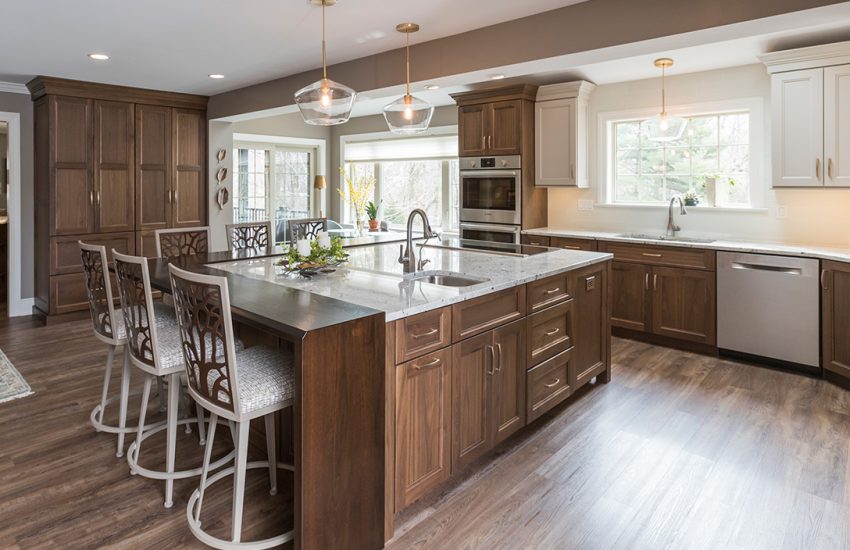
Remodeling costs $15 to $200 per square foot in 2026, with a whole house remodel averaging $20,000 to $100,000 depending on the square footage, quality of materials, structural changes, and local labor rates. A kitchen renovation runs $10,000 to $50,000, a bathroom update costs $5,000 to $25,000, and a complete gut-to-the-studs rebuild reaches $100,000 to $200,000 or more, according to HomeGuide and Angi's 2026 cost data. The Harvard Joint Center for Housing Studies (JCHS) projects total homeowner remodeling spending will reach $522 billion by the end of 2026, reflecting a market where more families choose to renovate rather than relocate. This article breaks down remodeling costs room by room, explains what drives prices higher or lower, identifies which projects deliver the strongest return on investment, and walks through how to set a budget that accounts for the hidden expenses most homeowners miss.
How Much Does It Cost To Remodel A House In 2026
The cost to remodel a house in 2026 ranges from $15 to $60 per square foot for a standard renovation and $60 to $150 per square foot for a complete gut remodel, according to HomeGuide. Angi places the national average at $52,000, with most homeowners spending between $19,500 and $88,400. Those averages cover homes in the 1,250-to-1,600-square-foot range. A 2,000-square-foot home remodeled at mid-range quality typically falls between $28,000 and $115,000, while the same scope on a 3,000-square-foot property reaches $40,000 to $160,000.
The cost per square foot for remodeling depends on how deeply the renovation reaches into the home's systems. Cosmetic work like painting, new flooring, updated fixtures, and cabinet refacing sits at the low end. Mid-range projects that replace cabinets, countertops, appliances, and flooring push costs into the $40 to $100 per square foot range. Projects that involve structural changes, plumbing relocation, electrical panel upgrades, and layout reconfiguration reach the high end. The National Association of Home Builders (NAHB) reported that remodeling companies now represent 56% of all residential building construction firms in the United States, up from 38% during the mid-2000s housing boom, a sign that renovation demand continues to outpace new construction in the current market.
Several forces shape remodeling prices in 2026 specifically. The NAHB projects 5% growth in residential remodeling activity, driven by high mortgage rates that make moving more expensive than upgrading. Harvard's JCHS describes this as a "stay-in-place" economy, where 90% of homeowners hire professionals for major renovation projects rather than attempting to sell and buy at elevated rates.
What Is A Reasonable Budget For Remodeling
A reasonable budget for remodeling is 5% to 15% of the home's current market value for a single major room renovation, and 10% to 30% of the home's value for a whole-house project. The National Kitchen and Bath Association (NKBA) recommends spending 10% to 25% of the home's value on a kitchen remodel and 5% to 10% on a bathroom remodel. A homeowner with a $350,000 property, for example, would plan $35,000 to $87,500 for a kitchen renovation and $17,500 to $35,000 for a bathroom overhaul under these guidelines.
Harvard's JCHS found that homeowners spent an average of $4,700 on improvements per household in 2023, nearly 9% above the previous market peak in 2007. That average includes everything from small fixture swaps to gut renovations. Setting a hard ceiling before meeting with contractors, then adding a 10% to 20% contingency fund on top, prevents the budget creep that derails projects mid-construction. The contingency covers what shows up behind walls, not wish-list upgrades added during the build.
What Costs The Most In A Home Remodel
Labor costs the most in a home remodel, consuming 50% to 60% of the total project budget in most renovations. Robert Dietz, Chief Economist at the NAHB, stated in late 2025 that labor continues to be the single biggest driver of remodeling costs, pointing to skilled trade shortages that push baseline pricing higher even for small projects. General contractors charge $50 to $150 per hour, though most take a management fee of 10% to 20% of the total project cost rather than billing hourly. Electricians bill $50 to $130 per hour, plumbers charge $45 to $150 per hour, and carpenters average $75 to $125 per hour, according to HomeGuide.
The NAHB's Home Builders Institute (HBI) Fall 2025 Construction Labor Market Report quantified the annual economic impact of the skilled labor shortage at $10.8 billion across the home building sector. That shortage means fewer available crews, longer wait times for project starts, and higher per-hour rates across every trade. Immigrant workers now make up 25.5% of the construction workforce, a historic high according to HBI data, yet demand for skilled tradespeople still outpaces supply in nearly every metro area.
After labor, materials account for 40% to 50% of the total remodeling budget. Cabinetry represents the single largest material expense in a kitchen remodel, consuming 29% to 40% of the kitchen budget alone, according to Angi. Countertop fabrication, appliance packages, and flooring follow. Moving plumbing or electrical systems, removing load-bearing walls, or raising rooflines introduces engineering fees, specialized trade costs, and additional permitting that can double a project's price compared to a cosmetic refresh in the same room.
How Much Does A Kitchen Remodel Cost
A kitchen remodel costs $10,000 to $50,000 on average, with the full range stretching from $5,000 for a minor cosmetic refresh to $125,000 or more for a high-end renovation with custom cabinetry and layout changes, according to HomeGuide. Angi's 2026 data places the national average at $26,962, with most homeowners landing between $14,591 and $41,542. Kitchen remodeling costs run $100 to $250 per square foot, depending on the scope and material quality.
The NKBA's recommended kitchen budget breakdown allocates 35% to cabinetry, 20% to design and labor, 12% to appliances, 11% to countertops, 9% to lighting and electrical, 7% to flooring, 3% to walls and ceilings, and 3% to plumbing. That breakdown applied to a $40,000 kitchen renovation puts cabinets at $14,000, design and labor at $8,000, appliances at $4,800, and countertops at $4,400. Stock cabinets start around $5,000, while semi-custom options run $10,000 to $25,000 and fully custom cabinetry exceeds $25,000.
One factor affecting kitchen remodeling costs specifically in 2026 is tariff exposure on imported cabinets. Approximately 60% of kitchen cabinets sold in the U.S. are imported, and tariffs on imported cabinetry increased from 25% to 50% in January 2026, according to CostFlowAI. That tariff shift raised retail cabinet prices 15% to 25% compared to mid-2025. Homeowners planning a late-2026 or 2027 kitchen remodel benefit from locking in a cabinet package early to protect against further price increases. Domestically manufactured countertop brands like Cambria carry less tariff exposure and offer more predictable pricing.
The 2025 Zonda Cost vs. Value Report found that a minor midrange kitchen remodel, which includes cabinet refacing, new hardware, updated countertops, a fresh sink, and a mid-grade appliance swap, delivers 112.9% return on investment (ROI) nationally. That makes it the highest-ROI interior home improvement project for the second consecutive year. Major midrange kitchen remodels return approximately 50.9%, and upscale renovations return around 35.7%. The consistent pattern across years of data shows that targeted cosmetic updates outperform large-scale rebuilds at resale.
What Is The Most Expensive Part Of A Kitchen Remodel
The most expensive part of a kitchen remodel is cabinetry, which accounts for 29% to 40% of the total kitchen budget, according to Angi and Highland Cabinetry's 2026 analysis. Custom cabinets with built-in features, specialized hardware, and premium wood species can exceed $28,000 for a standard-size kitchen. Semi-custom cabinets with plywood boxes and soft-close mechanisms cost $8,000 to $25,000 depending on kitchen size. Countertops represent the second largest expense, with quartz at $75 to $125 per square foot installed and granite at similar price points. Layout changes that require moving gas lines, plumbing stacks, or load-bearing walls add structural engineering, permits, and specialized trade costs on top of the cabinetry and countertop budget.
How Much Does A Bathroom Remodel Cost
A bathroom remodel costs $5,000 to $25,000, with the national average at approximately $12,100, according to Angi. This Old House's 2026 survey of 1,000 homeowners who recently completed bathroom renovations found that mid-range projects cost $6,456 to $24,715 for spaces measuring 40 to 150 square feet. Master bathroom remodels range from $8,000 to $30,000 or more depending on the level of customization, with features like double vanities, walk-in showers, soaking tubs, and heated flooring pushing costs toward the upper end.
The 2025 Cost vs. Value Report from the Journal of Light Construction found that a mid-range bathroom remodel returns 80% of its cost at resale, compared to 36% for an upscale bathroom renovation. Nearly 95% of homeowners surveyed by This Old House said they were satisfied with their completed bathroom renovation, even when the final cost exceeded initial estimates. About 1 in 3 respondents said the total cost was more than expected, most often because of plumbing upgrades, hidden water damage, or structural repairs discovered after demolition.
How Much Does It Cost To Rip Out And Replace A Bathroom
Ripping out and replacing a bathroom costs $12,000 to $30,000 for a full gut remodel that removes all existing finishes, replaces plumbing fixtures, installs new tile, and updates electrical and ventilation. Demolition alone adds $1,000 to $3,000 depending on the bathroom size and disposal costs. Waterproofing a shower or tub enclosure, which protects against leaks behind tile, adds $500 to $1,500. Plumbing reconfiguration, combined with tile work and waterproofing, accounts for 30% to 40% of a bathroom renovation budget, making plumbing the single most expensive system to change in a bathroom project.
How Much Does It Cost To Remodel Other Rooms
The cost to remodel other rooms depends on the systems inside each space. Living rooms, bedrooms, and home offices cost less per square foot than kitchens and bathrooms because they rarely involve plumbing or heavy cabinetry. Basements and attics cost more because they often require insulation, waterproofing, HVAC extension, and code-compliant egress windows.
A living room remodel costs $2,500 to $15,000, with most homeowners spending around $8,000 or $10 to $60 per square foot, according to HomeAdvisor. Bedroom remodeling runs $1,500 to $5,000 for a standard refresh including new flooring, paint, trim, and a ceiling fan. Custom closets and new windows push bedroom renovation costs to $4,000 to $12,000. Basement finishing averages $20,000 to $50,000 or $25 to $50 per square foot, and provides approximately 70% ROI at resale according to the 2025 Zonda Cost vs. Value Report. Attic conversions cost $25,000 to $75,000, with plumbing access being the primary cost escalator, if a bathroom is added to the attic space.
Exterior remodeling costs $6,000 to $20,000 for painting, landscaping, siding, and fencing combined. Exterior house remodeling delivers approximately 80% ROI and improves curb appeal, which influences buyer decisions before they ever step inside.
What Adds The Most Value To A House
Exterior improvements add the most value to a house at resale, according to the 2025 Zonda Cost vs. Value Report published by Remodeling Magazine. Garage door replacement ranks as the highest-ROI project at 268% nationally, with a $4,672 installation adding over $12,500 in resale value. Steel entry door replacement and manufactured stone veneer follow, each more than doubling the homeowner's investment. Eight of the top ten highest-ROI remodeling projects in the 2025 report are exterior improvements.
Project TypeAverage CostROI at ResaleGarage Door Replacement$4,672268%Steel Entry Door$2,200 - $4,000188%+Manufactured Stone Veneer$10,000 - $12,000153%+Fiber Cement Siding$14,000 - $22,000114%Minor Kitchen Remodel$28,458112.9%Vinyl Siding Replacement$17,95097%Deck Addition (Composite)$10,000 - $20,00089%Bathroom Remodel (Mid-Range)$6,456 - $24,71580%Basement Remodel$20,000 - $50,00071%Major Kitchen Remodel (Mid-Range)$29,000 - $64,00050.9%
The pattern holds across multiple years of reporting from Zonda. Exterior improvements with strong curb appeal outperform high-end interior renovations at resale because curb presentation influences buyer psychology at the first viewing. Real estate agent Peter Clark summarized the average remodeling ROI as roughly 74 cents returned for every dollar invested, according to HomeLight's 2025 data. West Coast projects recover costs 23% better than the national average, while Midwest projects tend to fall below the national median.
How Much Does Siding Replacement Cost
Siding replacement costs $8,000 to $30,000, with the price driven by home size, siding material, and installation complexity. Vinyl siding costs $4 to $12 per square foot installed. Fiber cement siding costs $5 to $14 per square foot installed, with a national project average of $14,674 according to This Old House. Fiber cement siding resists fire, moisture, and pests and is five times thicker than vinyl, which contributes to its higher price point and longer lifespan.
The 2025 Cost vs. Value Report places fiber cement siding replacement at 114% ROI nationally, meaning homeowners recoup more than their investment at resale. Vinyl siding replacement delivers 97% ROI. A standard vinyl siding project on a single-story home completes in three days. Larger homes with fiber cement and detailed trim require five to seven business days. Homes with multiple stories, dormers, or complex rooflines cost more because installation demands scaffolding and additional precision per square foot.
How Much Does An ADU Or Home Addition Cost
An ADU (Accessory Dwelling Unit) costs $150 to $300 per square foot on average, with most homeowners spending between $40,000 and $360,000 depending on the unit type and location. A 600-square-foot detached ADU averages $90,000 to $150,000, while a garage conversion runs $100 to $250 per square foot, according to Angi and HomeGuide. ADUs and home additions require separate utility connections, foundation work, and full permitting, which increases per-square-foot costs compared to renovating existing interior space.
The 2025 Zonda Cost vs. Value Report added ADUs as a tracked project category for the first time. Basement remodels, another newly tracked category, showed 71% ROI nationally with consistent returns across all regions. Washington State supports ADU development with relatively streamlined permitting, which can reduce soft costs compared to states with more restrictive local regulations. Labor accounts for approximately 40% of an ADU project's total cost, with general contractors charging 10% to 20% for project management and subcontractor coordination.
How Much Does Outdoor Living Space Remodeling Cost
Outdoor living space remodeling costs $1,500 to $180,000, with the average project at approximately $7,800 according to Angi. A basic concrete patio costs $3,000 to $6,000 for a 100-square-foot area. A paver patio of the same size runs $5,000 to $12,000. A 200-square-foot wood deck costs $5,000 to $10,000, while composite decking for the same area reaches $10,000 to $20,000. Adding an outdoor kitchen raises the total by $6,000 to $26,000 or more depending on the appliance package and countertop material.
Decks return approximately 89% of their cost at resale according to the National Association of Realtors' Remodeling Impact Report. The average cost to build a deck is $8,250, with most homeowners spending between $4,340 and $12,589, per HomeAdvisor. Composite decking costs more upfront than pressure-treated lumber but eliminates the recurring expense of staining, sealing, and board replacement over its 25-to-50-year lifespan. Building permits for outdoor projects cost $400 to $1,500, and site preparation runs $500 to $6,000 depending on grading and drainage conditions.
Is $100,000 Enough To Renovate A House
Yes, $100,000 is enough to renovate a house, but the scope depends on the home's size, condition, and location. For a 1,500-square-foot home in a moderate-cost area, $100,000 covers a mid-range kitchen remodel, one or two bathroom updates, new flooring throughout, fresh paint, updated lighting, and some exterior improvements. For a 3,000-square-foot home in a high-cost metro, $100,000 may only cover one or two rooms at mid-range finish quality.
The 2025 Zonda Cost vs. Value Report demonstrates that spreading a renovation budget across multiple targeted mid-range projects produces stronger total resale returns than concentrating the entire amount on one showpiece room with luxury finishes. Spending $100,000 across a minor kitchen remodel, a mid-range bathroom renovation, and a siding replacement recovers a higher percentage of cost at resale than investing the full amount in a single high-end kitchen with custom everything. Prioritizing rooms with the highest daily-use impact and strongest ROI makes $100,000 stretch further in both livability and property value.
Is $50,000 Enough To Remodel A House
Yes, $50,000 is enough to remodel a house when the scope focuses on cosmetic updates rather than structural changes. SoFi reports that the average whole house remodel cost ranges from $40,000 to $75,000, which places $50,000 firmly within the national mid-range. A $50,000 budget covers a kitchen refresh at $15,000 to $20,000, a bathroom update at $8,000 to $12,000, new interior paint and flooring at $5,000 to $8,000, and improvements to one or two additional rooms.
Staying within $50,000 requires keeping the existing layout intact. Every wall that stays in place, every plumbing line that remains where it is, and every electrical panel that does not need upgrading saves thousands. Homeowners in the Central Washington area often achieve significant improvements within this range because regional labor rates run below major coastal metros, stretching each dollar of the renovation budget further.
What Hidden Costs Should You Plan For
Hidden costs in a remodel include building permits, structural surprises behind walls, hazardous material abatement, waste removal, and scope changes during construction. Building permits cost $150 to $7,500 depending on the project size and municipality, according to Angi. Water damage repair runs $2,000 to $6,000 or more when discovered after demolition, according to HomeGuide. Outdated electrical panels that fail current code require upgrades adding $1,500 to $4,000. Asbestos abatement in pre-1980 homes costs $1,200 to $2,800.
A contingency fund of 10% to 20% of the total project budget is the single most effective protection against hidden costs. For older homes or projects involving structural work, plan closer to 20%. For cosmetic updates with minimal behind-the-wall work, 10% is sufficient. This contingency is a safety net, not a spending target. Scope changes initiated by the homeowner during construction, such as upgrading a countertop material or adding a feature not in the original plan, rank among the most common causes of budget overruns. Finalizing every material selection and design decision before demo day prevents the most avoidable cost increases.
How Do People Afford Home Renovations
People afford home renovations through savings, home equity loans, home equity lines of credit (HELOCs), cash-out refinancing, personal loans, and contractor payment plans. Home equity products offer the lowest interest rates for renovations above $20,000 because the loan is secured by the property's value. Cash-out refinancing allows homeowners to roll renovation costs into a new mortgage, which can make sense, if the new rate stays close to the existing rate.
Phased renovations spread costs over months or years by tackling one room at a time. This approach avoids lump-sum financial pressure and lets homeowners save between phases. Many contractors structure payment schedules tied to project milestones, splitting the total into a deposit, progress payments, and a final payment at completion. The Harvard JCHS projects that home improvement and repair spending will remain above $600 billion through 2025 for owner-occupied and rental properties combined, a signal that homeowners across income levels continue to invest in upgrades despite elevated borrowing costs.
How Long Does A Home Remodel Take
A home remodel takes 3 to 12 months depending on the number of rooms involved, the scope of structural work, and the permitting timeline. A single bathroom renovation runs 4 to 8 weeks from demolition to final walkthrough. A mid-range kitchen remodel takes 6 to 12 weeks of construction, with the full project timeline spanning 3 to 6 months when design, permitting, and material ordering are included. A whole-house renovation with structural changes takes 6 to 12 months or longer.
Delays occur most often from permit processing backlogs, material backorder lead times, and subcontractor scheduling conflicts. Custom cabinets carry 6-to-12-week lead times. Specialty tile and natural stone countertops often require 3 to 6 weeks from order to delivery. Building a realistic schedule with 2 to 4 weeks of buffer beyond the contractor's estimate accounts for weather interruptions, inspection delays, and supply chain disruptions that affect nearly every project.
How To Save Money On A Home Remodel
Saving money on a home remodel starts with preserving the existing layout and avoiding structural changes that require engineering, permitting, and specialized trades. The following steps reduce remodeling costs without sacrificing quality or durability:
- Keep the existing kitchen and bathroom footprint. When the sink, stove, and toilet stay in their current positions, plumbing and electrical costs drop by thousands.
- Reface or refinish cabinets instead of replacing them, if the existing boxes are structurally sound. Cabinet refacing costs 30% to 50% less than full replacement.
- Choose mid-grade materials that perform well without the premium markup. Domestically manufactured quartz countertops carry less tariff exposure than imported stone in 2026.
- Get three to five detailed, itemized bids from licensed contractors. Line-item comparison across bids reveals inflated pricing and identifies fair market rates for each trade.
- Finalize every material selection and design decision before construction begins. Mid-project changes trigger change orders, extra labor, and material waste that compound quickly.
- Prioritize high-ROI projects first. A minor kitchen remodel at 112.9% ROI and a garage door replacement at 268% ROI recover their costs in home value at resale.
- Phase the renovation over multiple seasons to spread costs and avoid high-interest borrowing for the entire budget at once.
Frequently Asked Questions
What Are The Most Popular Home Renovations
The most popular home renovations are kitchen remodels, bathroom updates, and exterior improvements including siding, garage doors, and entry doors. Harvard's JCHS found that replacement projects like roofing, windows, and HVAC systems accounted for 49% of improvement expenditures in 2023. Approximately 48% to 51% of homeowners plan to renovate in 2025 and 2026, with kitchens and bathrooms at the top of the priority list. Aging-in-place modifications, including wider doorways, grab bars, and curbless showers, represent a growing category, with 73% of remodelers reporting increased requests for these features over the past five years according to the NAHB.
What Devalues A House The Most
Deferred maintenance devalues a house the most because visible neglect signals to buyers that hidden problems likely exist. Peeling paint, damaged siding, failing roofing, and outdated electrical or plumbing systems reduce buyer confidence and appraisal values. Over-improving a home beyond the neighborhood's price ceiling also erodes ROI, because buyers will not pay a premium that exceeds comparable sales in the surrounding area.
How Much Would It Cost To Replace A Tub With A Walk-In Shower
Replacing a tub with a walk-in shower costs $6,000 to $15,000 for a mid-range installation. The cost includes demolition of the existing tub, plumbing modification to relocate the drain and valve, waterproofing, tile or panel installation, a glass enclosure, and new fixtures. Accessibility features like a zero-threshold entry, grab bars, and a built-in bench add $1,000 to $3,000 to the total.
How Do You Prioritize What To Remodel First
Prioritizing what to remodel first starts with addressing safety and structural issues, followed by high-ROI rooms, and then comfort upgrades. Roof leaks, electrical hazards, and plumbing failures come before cosmetic improvements. After safety items, kitchens and bathrooms deliver the strongest combination of daily livability improvement and resale value. Exterior curb appeal projects like siding, entry doors, and garage doors produce the highest measurable returns at resale.
Can You Remodel A House For $20,000
Yes, you can remodel a house for $20,000, but the scope is limited to cosmetic updates in one or two rooms. This budget covers interior painting, new flooring in common areas, updated lighting fixtures, and a minor bathroom improvement such as a new vanity, faucet, and mirror. Structural changes, full kitchen overhauls, and multi-room renovations exceed $20,000 in most markets.
How Much Does A Living Room Remodel Cost
A living room remodel costs $2,500 to $15,000, with most homeowners spending an average of $8,000, or $10 to $60 per square foot, according to HomeAdvisor. Living room renovations typically include new flooring, fresh paint, crown molding, updated lighting, and window treatments. Because living rooms rarely involve plumbing or specialized trades, labor costs run lower per square foot than kitchen or bathroom projects.
How Much Of A Remodeling Budget Goes To Labor
Fifty to sixty percent of a remodeling budget goes to labor, according to industry data compiled by Angi and the NAHB. The HBI's Fall 2025 Construction Labor Market Report found the aggregate economic impact of the skilled labor shortage in home building at $10.8 billion per year. General contractors take 10% to 20% of total project cost for project management, and fringe benefits for residential remodeling workers average 19% on top of payroll according to NAHB's analysis of the 2022 Economic Census.
Putting It All Together
Remodeling costs in 2026 reflect a market shaped by sustained homeowner demand, elevated trade labor rates, and tariff-driven material price shifts. The smartest renovation approach matches the project scope to a realistic budget, prioritizes rooms and improvements that deliver both daily livability and strong resale returns, and protects the timeline with a contingency fund for the unexpected. The data consistently shows that mid-range updates outperform luxury overhauls at resale, and exterior improvements outperform interior ones in ROI.
Here at AZ Builders LLC, we work with homeowners across the Wenatchee Valley to plan and execute renovations that stay on budget, hold up structurally, and improve the way a home functions for the people who live in it. If you have questions about scope, timeline, or what to expect for your project, reach out at (509) 661-2919 for a conversation.
.webp)

.webp)
.webp)
You May Also Like
.webp)
.webp)
%201.webp)
%202.webp)
%203.webp)
.webp)


.avif)