.webp)
LP SmartSide vs Fiber Cement Siding Which One Is Better
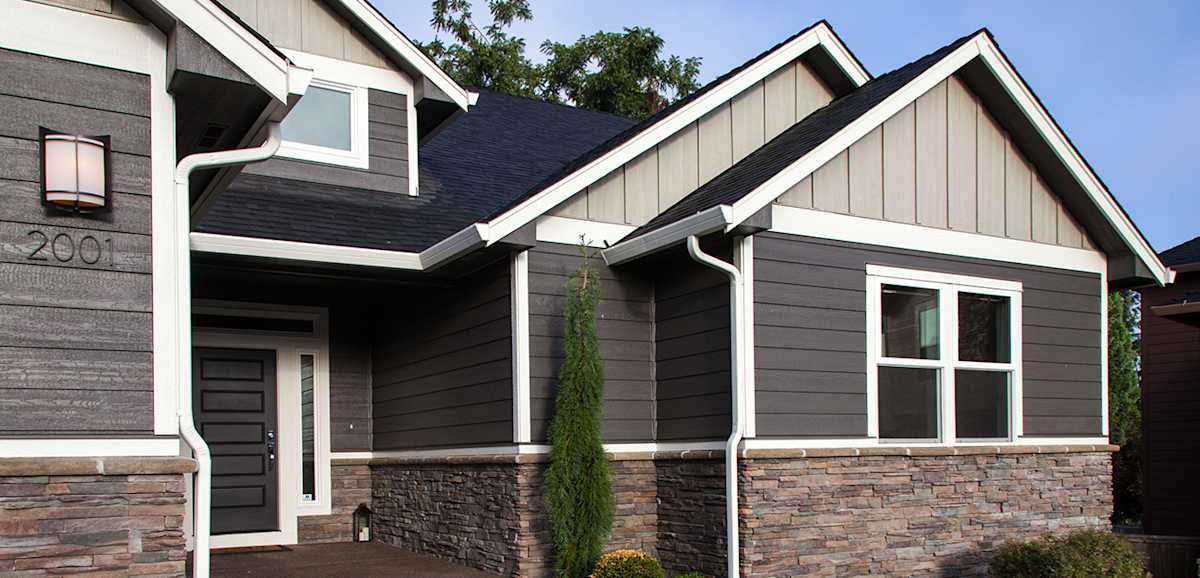
LP SmartSide is an engineered wood siding made from wood strands bonded with resin and treated with zinc borate, while fiber cement siding is a composite of Portland cement, sand, water, and cellulose fibers. Fiber cement siding generally performs better in fire resistance, moisture durability, and long-term maintenance, while LP SmartSide costs less upfront and installs faster due to its lighter weight. The choice between these two materials depends on your climate, maintenance tolerance, budget, and how long you plan to stay in the home. According to the 2025 Zonda Cost vs. Value Report, fiber cement siding replacement returns 114% of its cost at resale nationally, making it one of the highest-ROI exterior improvements available. This article compares LP SmartSide and fiber cement siding across composition, durability, fire resistance, cost, maintenance, warranty, appearance, and resale value so you can make the right decision for your home.
What Is LP SmartSide Siding Made Of
LP SmartSide siding is made of engineered wood strands that are coated with wax for moisture resistance and bonded together with phenolic resin under heat and pressure. Louisiana-Pacific Corporation (LP Building Solutions) manufactures LP SmartSide using a proprietary process called SmartGuard, which infuses each wood strand with zinc borate. Zinc borate is a mineral compound that protects against termites, carpenter ants, and fungal decay. A water-resistant resin overlay on the panel surface adds an additional moisture barrier. The result is a siding product that looks and feels like natural wood but resists the rot, warping, and splitting that traditional wood siding suffers from.
LP SmartSide panels come in several profiles, including lap siding, vertical panels, shakes, and soffit. Standard lap siding panels measure 16 feet in length, compared to the 12-foot standard for most fiber cement lap products. The longer panels produce fewer visible seams on a finished wall, which contributes to a cleaner appearance. LP SmartSide weighs approximately 1.1 to 1.3 pounds per square foot, making it significantly lighter than fiber cement siding. That lower weight reduces labor hours during installation and allows crews to handle panels with fewer workers.
What Is Fiber Cement Siding Made Of
Fiber cement siding is made of Portland cement, silica sand, water, and cellulose fibers derived from wood pulp. These materials are mixed into a slurry, pressed into molds, and cured under high heat and pressure to create dense, rigid panels. The cement and sand give fiber cement its hardness and fire resistance. The cellulose fibers reinforce the cement matrix and provide flexibility that prevents cracking under normal conditions. Modern fiber cement siding contains no asbestos, which was phased out of fiber cement manufacturing decades ago.
James Hardie is the largest manufacturer of fiber cement siding in the United States, holding approximately 90% of the fiber cement market share according to industry estimates. James Hardie produces its fiber cement using a proprietary process that includes the Engineered for Climate system, which adjusts the product formulation for different climate zones. Fiber cement siding weighs approximately 2.3 to 2.5 pounds per square foot, roughly double the weight of LP SmartSide. That added density contributes directly to fire resistance, impact resistance, and sound dampening, but requires larger installation crews and specialized cutting tools that generate silica dust.
Is Fiber Cement Siding More Durable Than LP SmartSide
Yes, fiber cement siding is more durable than LP SmartSide in most measurable categories. Fiber cement siding lasts 40 to 50 years with proper maintenance, while LP SmartSide lasts 30 to 50 years depending on maintenance frequency and climate exposure. The difference between those ranges is significant. Fiber cement reaches its upper lifespan range with moderate maintenance, while LP SmartSide reaches its upper range only with consistent repainting every 5 to 7 years, according to Modern Exterior Systems.
Fiber cement resists moisture at a fundamental material level because cement and sand do not absorb water. LP SmartSide absorbs 12% to 16% moisture at saturation according to technical testing data published by Facade Colorizer, and its phenolic resin and wax block capillary pathways to limit moisture penetration. The critical moisture threshold for LP SmartSide is 28% moisture content (MC). Below 28% MC, zinc borate suppresses fungal activity indefinitely. Above 28% MC, fungal hyphae can establish and cause decay. Fiber cement has no equivalent moisture threshold because it does not contain organic material that fungi can feed on.
Impact resistance is one area where LP SmartSide holds an advantage. Engineered wood flexes on impact rather than cracking, which means LP SmartSide absorbs hail strikes and physical contact better than fiber cement. The Insurance Institute for Business and Home Safety (IBHS) tests show that fiber cement handles hail up to approximately 1.75 inches in diameter before fracturing, while LP SmartSide's flexibility allows it to absorb impacts that would crack a rigid cement panel. In hail-prone regions, this difference matters. In moisture-heavy climates, fiber cement's inability to absorb water matters more.
Is LP SmartSide As Good As Fiber Cement
LP SmartSide performs comparably to fiber cement in several categories and outperforms it in a few specific areas, but fiber cement holds clear advantages in fire resistance, moisture immunity, and long-term maintenance burden. LP SmartSide delivers better impact resistance, lighter weight for easier handling, and a more authentic natural wood grain appearance because it is actual wood. Fiber cement delivers better fire protection, lower long-term maintenance costs, stronger resale value, and immunity to moisture-related decay.
Both materials significantly outperform vinyl siding in durability, appearance, and value. Both accept paint well and come pre-primed from the factory. Both resist warping, buckling, and fading under normal conditions. The practical difference between these two materials shows up over a 20-to-30-year ownership window, where cumulative maintenance costs, repainting frequency, and material-specific vulnerabilities compound.
How Does Fire Resistance Compare Between LP SmartSide And Fiber Cement
Fiber cement siding carries a Class A fire rating, the highest rating available for building materials, and is classified as noncombustible per ASTM E136 testing. LP SmartSide carries a Class C fire rating, which provides some flame-spread resistance but does not classify the material as noncombustible. Fiber cement siding will not ignite when exposed to direct flame and will not contribute fuel to a fire. LP SmartSide, as an engineered wood product bonded with resin, is combustible and can contribute to fire spread under sustained heat exposure.
This fire resistance difference has practical financial consequences. A survey cited by James Hardie found that 7 out of 10 insurance professionals may offer a discount for fiber cement siding on a home. Many insurance companies recognize fiber cement's noncombustible classification and reduce premiums accordingly. LP SmartSide's Class C rating does not typically qualify for the same insurance discount. In wildfire-prone regions and areas with Wildland-Urban Interface (WUI) building codes, fiber cement siding meets code requirements that LP SmartSide cannot satisfy without additional fire-barrier assemblies.
How Much Does LP SmartSide Cost Compared To Fiber Cement
LP SmartSide costs $4.50 to $9.00 per square foot installed in 2026, according to SidingCosts.com. Fiber cement siding costs $5 to $14 per square foot installed, according to This Old House. For a typical 2,000-square-foot home with approximately 2,500 square feet of siding area, LP SmartSide runs $9,000 to $18,000 total, while fiber cement runs $12,500 to $35,000. James Hardie fiber cement averages about one dollar more per square foot than LP SmartSide at comparable finish levels, according to the Siding Cost Report cited by Siding & Windows Group.
LP SmartSide's lower installed cost comes primarily from faster installation time. The material weighs half as much as fiber cement, cuts with standard wood saws instead of specialized carbide-tipped blades, and does not produce silica dust that requires respiratory protection during cutting. Crews install LP SmartSide panels faster per square foot, which reduces labor hours. LP SmartSide's 16-foot panel lengths also cover more wall area per piece than fiber cement's 12-foot standard, reducing the number of seams to caulk and the total installation time.
The 2025 Zonda Cost vs. Value Report places fiber cement siding replacement at 114% ROI nationally at resale. Vinyl siding replacement returns 97%. LP SmartSide is not tracked as a separate category in the Cost vs. Value Report, but industry estimates place its resale return between vinyl and fiber cement. The upfront savings on LP SmartSide narrow when long-term repainting costs are factored in. A full exterior repaint costs $2,000 to $6,000 depending on home size and region, and LP SmartSide typically needs repainting every 7 to 10 years according to VIS Exteriors. Fiber cement with a factory-applied finish like James Hardie's ColorPlus Technology can go 15 years or more before requiring a repaint.
FeatureLP SmartSideFiber Cement (James Hardie)Material CompositionEngineered wood strands, resin, wax, zinc boratePortland cement, silica sand, cellulose fibers, waterWeight Per Square Foot1.1 - 1.3 lbs2.3 - 2.5 lbsFire RatingClass CClass A (noncombustible per ASTM E136)Installed Cost (2026)$4.50 - $9.00 per sq ft$5.00 - $14.00 per sq ftExpected Lifespan30 - 50 years (maintenance-dependent)40 - 50 yearsRepaint FrequencyEvery 7 - 10 years (primed); 15+ years (ExpertFinish)Every 10 - 15 years (primed); 15+ years (ColorPlus)Impact ResistanceSuperior (flexes on impact)Good (can crack under large hail)Moisture ResistanceTreated but absorbs 12-16% at saturationDoes not absorb water (inorganic material)Pest ResistanceZinc borate treatment deters termites and decayInorganic; pests cannot feed on cementWarranty5/50-year limited, prorated after year 530-year non-prorated, transferable (James Hardie)Standard Panel Length16 feet12 feetROI at ResaleBetween vinyl (97%) and fiber cement (114%)114% nationally (2025 Cost vs. Value Report)Insurance Discount PotentialUnlikely (Class C rating)Yes (7 in 10 insurers may offer discount)
What Are The Disadvantages Of LP SmartSide
The disadvantages of LP SmartSide include higher moisture vulnerability compared to fiber cement, lower fire resistance, a prorated warranty structure, and more frequent repainting requirements. LP SmartSide is still a wood-based product at its core. Despite the SmartGuard treatment, the engineered wood substrate absorbs moisture that cement-based products cannot. When moisture exceeds the 28% MC critical threshold, fungal decay can begin. Improper flashing, missing water barriers, or failure to maintain paint and caulk accelerates moisture damage in LP SmartSide installations.
LP SmartSide's warranty structure is another disadvantage. The 5/50-year limited prorated warranty covers the material in full for only the first 5 years. After year 5, coverage decreases by approximately 2.2% per year, according to Straight Line Construction. At 30 years of ownership, only about 34% of the original warranty value remains. James Hardie's 30-year non-prorated transferable warranty covers 100% of the material for the full 30-year term when installed by a certified contractor. That warranty difference represents a meaningful gap in long-term protection for the homeowner's investment.
What Are The Downsides Of Fiber Cement Siding
The downsides of fiber cement siding include higher upfront cost, heavier weight requiring larger crews, specialized cutting tools that generate silica dust, and the potential for cracking, if installed incorrectly in cold climates. Fiber cement weighs approximately double what LP SmartSide weighs per square foot, which increases labor time and installation cost. Cutting fiber cement requires carbide-tipped saw blades and produces airborne silica dust that demands respiratory protection under OSHA regulations. LP SmartSide cuts with standard wood tools and produces no silica dust.
Fiber cement siding can crack during freeze-thaw cycles, if panels are installed without proper expansion gaps or fastened too tightly. LP SmartSide's engineered wood composition makes it more flexible, and that flexibility helps it handle freeze-thaw expansion and contraction slightly better than rigid cement panels. In regions with extreme temperature swings, proper installation technique matters more for fiber cement than for LP SmartSide. Both materials perform well in cold climates when installed by experienced crews who understand the specific spacing and fastening requirements of each product.
How Often Does Fiber Cement Siding Need To Be Repainted
Fiber cement siding needs to be repainted every 10 to 15 years when field-painted (primed and painted on-site after installation). Factory-prefinished fiber cement siding, such as James Hardie's ColorPlus Technology, extends the repaint interval to 15 years or more. ColorPlus applies multiple coats of paint under controlled factory conditions, producing a more uniform and durable finish than field-applied paint achieves. The factory finish resists fading, peeling, and cracking longer than standard exterior paint applied by a painter on-site.
LP SmartSide in its primed (non-prefinished) form requires repainting every 7 to 10 years, according to VIS Exteriors and Perfect Exteriors of Minnesota. LP SmartSide with ExpertFinish, LP's factory-prefinished option, extends that interval to 15 years or more, comparable to fiber cement's ColorPlus. The repainting cost difference compounds over a 30-year ownership period. If LP SmartSide needs repainting three to four times over 30 years at $2,000 to $6,000 per repaint, and fiber cement needs repainting one to two times in the same period, the cumulative maintenance cost gap can reach $4,000 to $12,000 in favor of fiber cement.
Does Fiber Cement Siding Lower Home Insurance
Yes, fiber cement siding can lower home insurance premiums because insurance companies recognize its noncombustible Class A fire rating as a reduced risk factor. A survey cited by James Hardie found that 7 out of 10 insurance professionals may offer a discount for homes with fiber cement siding. The exact discount varies by insurer, geographic region, and overall policy structure. Homeowners in wildfire-prone areas and states with WUI building codes tend to see the largest insurance savings from fiber cement installation.
LP SmartSide's Class C fire rating does not typically qualify for the same insurance discount. The siding performs well against everyday weather exposure, but its wood-based composition means it can contribute to fire spread under sustained flame contact. In Colorado, for example, the Colorado Wildfire Resiliency Code (CWRC) requires noncombustible exterior materials in Moderate to High Intensity WUI zones. Fiber cement meets that requirement. LP SmartSide does not, unless paired with additional fire-barrier assemblies that add cost and complexity to the installation.
Which Siding Looks More Like Real Wood
LP SmartSide looks more like real wood than fiber cement siding because LP SmartSide is actual wood. The engineered wood strands produce a natural grain pattern and texture that closely matches traditional cedar and pine siding. Fiber cement siding uses embossed textures pressed into the cement surface during manufacturing to simulate a wood grain appearance. The embossed texture produces a consistent, repeating pattern that reads as slightly more uniform than natural wood. Up close, LP SmartSide's wood grain feels organic in a way that fiber cement's pressed texture does not replicate.
Both materials significantly improve curb appeal compared to vinyl siding. James Hardie offers a wider variety of colors through its ColorPlus Technology, with factory-applied finishes available in over 700 colors. LP SmartSide offers 16 standard colors in its ExpertFinish line, with the option to field-paint any custom color on primed panels. LP SmartSide takes stain better than fiber cement because the wood substrate absorbs stain the way natural wood does. For homeowners who prefer a stained rather than painted look on their exterior siding, LP SmartSide accommodates that finish type more naturally.
What Is The Least Expensive Way To Side A House
The least expensive way to side a house is vinyl siding, which costs $4 to $12 per square foot installed, according to This Old House. Vinyl siding requires minimal maintenance and never needs painting, but it offers lower durability, impact resistance, and fire protection compared to both LP SmartSide and fiber cement. LP SmartSide represents the next price tier at $4.50 to $9.00 per square foot installed, offering substantially better durability and appearance than vinyl at a modest cost increase. Fiber cement occupies the premium tier at $5 to $14 per square foot installed, delivering the highest fire resistance, longest lifespan, and strongest resale ROI of the three materials.
The cost calculation changes when long-term maintenance is factored in. Vinyl's low upfront cost comes with a 20-to-30-year lifespan and limited impact resistance. LP SmartSide's moderate cost requires cumulative repainting every 7 to 10 years. Fiber cement's higher upfront cost produces the lowest lifetime cost per year of protection when divided across its 40-to-50-year lifespan. Homeowners who plan to stay in the home for 15 years or more typically find that fiber cement's higher initial investment produces lower total cost of ownership than LP SmartSide over the full ownership period.
What Siding Should You Avoid
The siding to avoid depends on the climate, the home's exposure conditions, and the homeowner's maintenance commitment. In humid climates with sustained moisture exposure, LP SmartSide's wood-based composition carries more risk than fiber cement, because standing water or failed flashing can push moisture content above the 28% decay threshold. In wildfire zones, any combustible siding material including LP SmartSide and vinyl creates higher risk than noncombustible fiber cement. In hail-prone regions, rigid materials like fiber cement can crack under large hailstones, making impact-resistant options like LP SmartSide or steel siding better choices.
Cheap vinyl siding with thin gauge profiles should be avoided in regions with severe weather. Low-grade vinyl warps in extreme heat, cracks in extreme cold, and melts near open flame. Standard-thickness vinyl siding serves well in moderate climates with limited severe weather exposure, but premium LP SmartSide or fiber cement outperforms vinyl in every measurable durability category.
Which Siding Is Better For The Pacific Northwest Climate
Fiber cement siding is generally the better choice for the Pacific Northwest climate because its inorganic composition makes it immune to the moisture-related decay that sustained rain and humidity cause in wood-based products. The Wenatchee Valley and Central Washington experience a drier climate than the western side of the Cascades, which gives LP SmartSide a more favorable performance window in this specific sub-region. In wetter areas west of the mountains, fiber cement's moisture immunity provides a more significant advantage.
LP SmartSide performs well in Central Washington's semi-arid conditions, if flashing details, ground clearance, and paint maintenance are followed precisely. LP requires a minimum 6-inch clearance between the siding and finished grade, kickout flashing at all roof-to-wall transitions, and Z-flashing over horizontal joints. These are warranty conditions, not optional best practices. When these details are executed correctly, LP SmartSide provides decades of protection in drier climates. When they are missed, moisture damage can develop within years. Fiber cement tolerates flashing imperfections better because the material itself does not absorb water.
Frequently Asked Questions
Is LP SmartSide Worth The Money
LP SmartSide is worth the money for homeowners who want a natural wood appearance at a lower upfront cost than fiber cement, are willing to maintain a repainting schedule every 7 to 10 years, and live in a climate without extreme sustained moisture. LP SmartSide costs approximately 30% less than James Hardie fiber cement for a typical installation, according to SidingCosts.com. That savings makes it an attractive option for budget-conscious projects, rental properties, and homes in dry climates where moisture risk is low.
Is Fiber Cement Siding Better Than LP Smart Siding
Fiber cement siding is better than LP SmartSide in fire resistance, moisture durability, long-term maintenance cost, warranty coverage, and resale value. LP SmartSide is better in impact resistance, installation speed, weight handling, and upfront affordability. The best choice depends on which attributes matter most for the specific home, climate, and ownership timeline. Homeowners who plan to stay 15 years or longer tend to benefit from fiber cement's lower cumulative maintenance costs and higher resale ROI.
How Much Does Fiber Cement Siding Cost For A 2,000 Square Foot House
Fiber cement siding costs $12,500 to $35,000 for a 2,000-square-foot house, depending on the product line, finish type, and regional labor rates, according to This Old House. A comparable LP SmartSide installation on the same house runs $9,000 to $18,000. The gap narrows when prefinished products are compared. James Hardie ColorPlus at the mid-range and LP SmartSide ExpertFinish at the mid-range produce installed costs within $2,000 to $5,000 of each other for an average-size home.
Can Rats Chew Through Fiber Cement Siding
No, rats cannot chew through fiber cement siding because the material is composed of Portland cement and silica sand, which are too hard for rodent teeth to penetrate. Fiber cement's inorganic composition makes it completely resistant to all biological pests, including termites, carpenter ants, rodents, and woodpeckers. LP SmartSide's zinc borate treatment deters termites and fungal decay effectively, but the underlying wood substrate can be vulnerable to persistent gnawing by rodents in extreme cases, if the treated surface is compromised.
How Often Does LP SmartSide Need To Be Repainted
LP SmartSide in its primed form needs to be repainted every 7 to 10 years depending on climate and sun exposure. LP SmartSide with the ExpertFinish factory-applied coating extends the repaint interval to 15 years or more, according to LP Building Solutions. Consistent repainting is a warranty condition. Failure to maintain the paint coating voids the LP SmartSide warranty and exposes the wood substrate to moisture penetration that accelerates decay.
What Is The Newest Type Of Siding For Houses
The newest types of siding for houses include LP SmartSide ExpertFinish with factory-applied color coatings, James Hardie's Statement Collection with ultra-thick profiles and premium factory finishes, and insulated vinyl siding systems that combine rigid foam backing with a vinyl face for improved energy efficiency. Steel siding with weather-lock panels has also gained market share in hail-prone regions. Factory-prefinished products across all materials represent the strongest trend in residential siding, because factory-applied coatings outperform field-painted finishes in adhesion, color consistency, and longevity.
What Was The Main Problem With Fiber Cement Board Siding
The main problem historically associated with fiber cement board siding was cracking during installation or freeze-thaw cycles when panels were fastened too tightly or installed without proper expansion gaps. Modern fiber cement products from James Hardie address this through climate-specific formulations (the Engineered for Climate system) and detailed installation specifications. Cracking remains possible with improper installation, but experienced crews who follow manufacturer guidelines produce installations that last decades without cracking issues.
Putting It All Together
LP SmartSide and fiber cement siding both outperform vinyl in durability, appearance, and home value. The choice between them comes down to budget, climate, maintenance tolerance, and how long you plan to own the home. LP SmartSide costs less upfront, installs faster, absorbs impacts better, and delivers a natural wood look. Fiber cement resists fire, moisture, and pests at a level that engineered wood cannot match, carries a stronger warranty, and produces the highest resale ROI of any siding material tracked by the Cost vs. Value Report.
Here at AZ Builders LLC, we install both LP SmartSide and fiber cement siding across the Wenatchee Valley and surrounding areas. We help homeowners choose the right material based on their home's exposure, their budget, and their long-term plans. If you have questions about which siding fits your project, reach out at (509) 661-2919 for a conversation about your options.
.webp)

.webp)
.webp)
You May Also Like
.webp)
.webp)
%201.webp)
%202.webp)
%203.webp)
.webp)


.avif)